About
Artist exploring 3D scanning, computer vision and the still-life tradition.
David Lisser is an artist based in the Netherlands. His work uses 3D scanning and computer vision to consider how the natural world is simulated and translated through digital interfaces, and what is lost, distorted, or invented in that process.
His practice spans sculpture, digital renders and short videos. He considers 3D scanning a form of expanded photography: not merely documenting the world, but actively translating it, complete with its own particular codes, distortions, and politics.
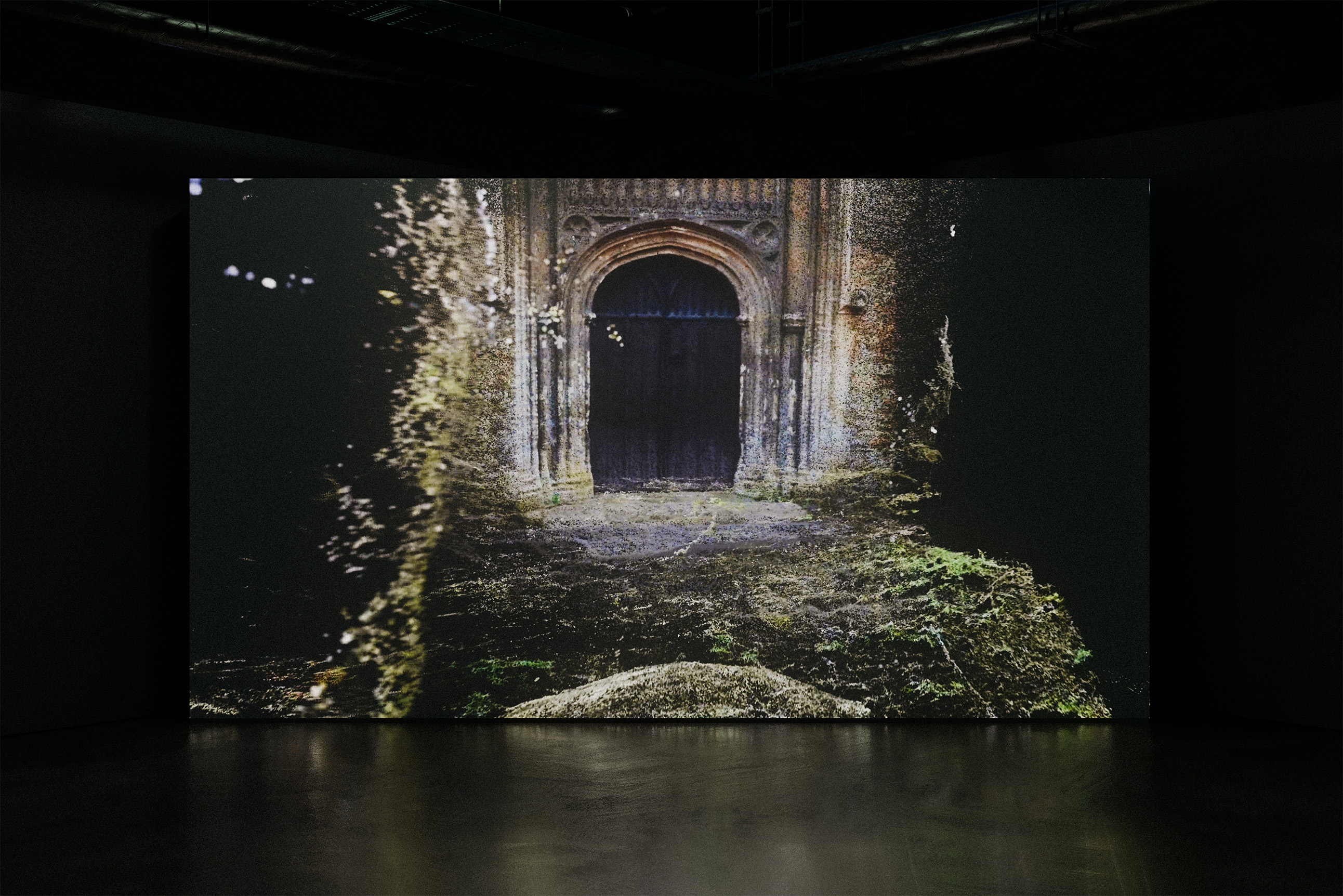 a glass darkly, installation shot
Central to his practice is the proposition that these kind of tools are never neutral instruments. Every survey or scan carries the assumptions of its development: what counts as a surface, what constitutes space, how light should behave. These embedded positions become visible where materials or conditions resist the logic of machine vision, producing errors and distortions that the work uses as its starting point.
David has shown work at The Bowes Museum, KARST, Uncommon Gallery, Beijing Contemporary, BALTIC, Calgary Contemporary, MIMA, Centre for Study of Existential Risk, The Newbridge Project, Watershed and Northern Gallery of Contemporary Art amongst many others.
He has conducted research residencies with Pervasive Media Studio, Newcastle University, Cambridge University and The Museum of English Rural Life.
He is the recipient of DYCP funding from Arts Council England to pursue digital production practices and was a participating artist in Syllabus IV, co-ordinated by Wysing, Eastside Projects, Spike Island, Iniva, S1 and Studio Voltaire.

Points in Time on view at The Bowes Museum, 2025
To contact, please email here:
For more information about his work with cultured meat, please see this interview, published by Young Artists in Conversation in 2017.